
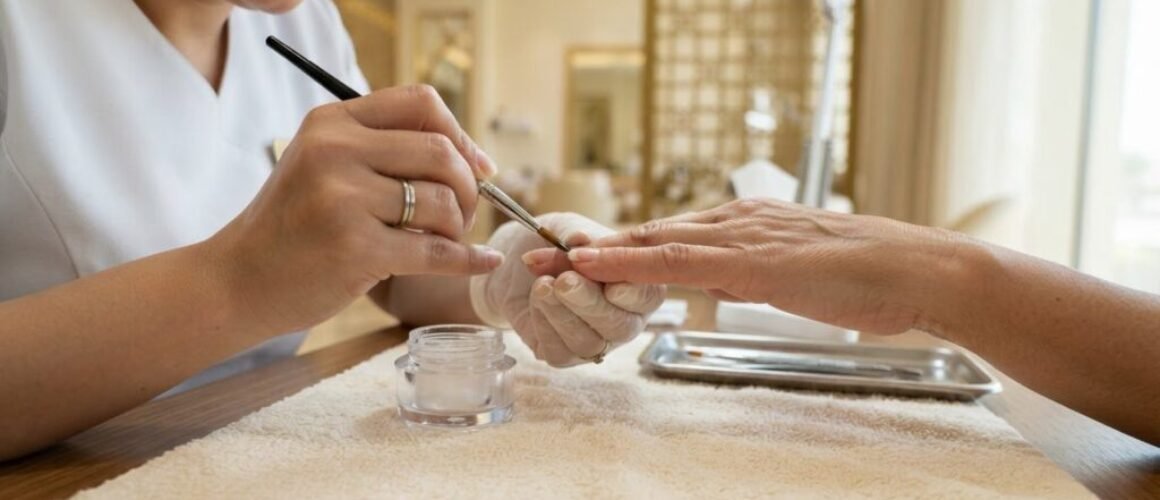
Hard Gel Overlay for Weak, Peeling Nails and Adding Length Later
Peeling nails don’t automatically rule out a hard gel overlay for weak, peeling nails. A carefully applied layer can add structure and help protect the free edge, while gel polish provides colour and a short-term coating rather than the same level of support.
Starting with an overlay doesn’t mean you have to keep your nails short forever. You can consider adding length later with hard gel, shaped to suit your natural nails.
This guide explains how hard gel differs from gel polish, what professional application involves, and why careful removal matters for fragile nails. An overlay may support your nails, but it won’t address the underlying cause of peeling, so their condition matters when deciding whether to proceed.
Key Takeaways
- Learn how careful preparation and professional removal can help reduce stress on fragile natural nails.
- Compare the added structure of a gel overlay with the temporary coating of gel polish and nail hardener.
- Know what to expect at your appointment, including how to prepare your hands for application.
- Find out how an overlay can provide a starting point for adding length later.
Does a gel overlay damage natural nails?
A gel overlay does not automatically damage natural nails. Careful preparation and removal are important for preserving the nail plate.
Nail Prep and Natural Nail Health
Nail preparation means shaping and cleansing the natural nail before gel application. Excessive filing or scraping can thin the nail surface, so arrive with clean hands and avoid cutting or scraping your cuticles at home. This allows the nail technician to assess the nail and surrounding skin.
Risks of Aggressive Prep and Removal
Aggressive preparation or removal can take layers from the natural nail, making it more vulnerable to peeling. Picking at lifting hard gel is particularly risky because it can pull at the nail plate. If an edge lifts, don’t peel or pry it away. Have a professional remove the product when changing a hard gel set, especially if your nails already split.
Removal Methods and Damage Risks
Removal methods affect how much pressure and abrasion reach the natural nail. Pulling or peeling gel away can worsen existing splits, while forceful filing may remove natural nail layers along with product. Soak-off gel polish can be wrapped in acetone for 10 to 15 minutes before removal. Builder gel overlays may also take about 10 to 15 minutes to soak off with an acetone wrap, depending on the product.
Professional Soak-Off and Gentle Removal
Professional soak-off removal means softening suitable gel products before gently taking away the loosened material. This can help protect weak or peeling nails by reducing the risk of pulling off nail layers. Hard gel sets should be removed professionally when you’re changing the set; avoid treating every gel product as soak-off. A measured removal, without picking or forcing product from the plate, helps preserve the natural nail for its next look.
How is an overlay different from a manicure with gel polish?
Gel polish adds colour and a short-term protective coating, while an overlay focuses on structure. Nail hardener is a lighter option if you don’t want an added gel layer.
Nail Hardener and Gel Overlays
Nail hardener is a polish intended to support the nail surface; an overlay adds a gel layer for more structure. This difference matters if your natural nails bend, peel, or break before gaining length. Hardener polish needs regular upkeep, with reapplication every few days.
An overlay sits on the nail plate as a protective layer, but it doesn’t repair the underlying cause of peeling. Gel polish mainly provides colour and a short-term coating. For a neat manicure without extra structure, gel polish may suit you; if you want added support, an overlay is the more relevant option to consider.
Gel, BIAB, and Dip Powder
Builder-style overlays, including BIAB, are designed to add more structure than gel polish. Dip powder can also be durable, but durability doesn’t remove the need for careful removal. Choose a method that suits both your preferred finish and the condition of your natural nails.
For example, a nail peeling at the free edge may benefit more from a structured overlay than from colour alone. No coating restores nail health: it provides a protective layer while the natural nail grows. If your nails are extremely thin or sore, postponing enhancements may be gentler. Consider your preferred finish, nail condition, and ability to maintain the coating.
If you’re considering a polished look, explore gel nail options while weighing the finish and structure you want.
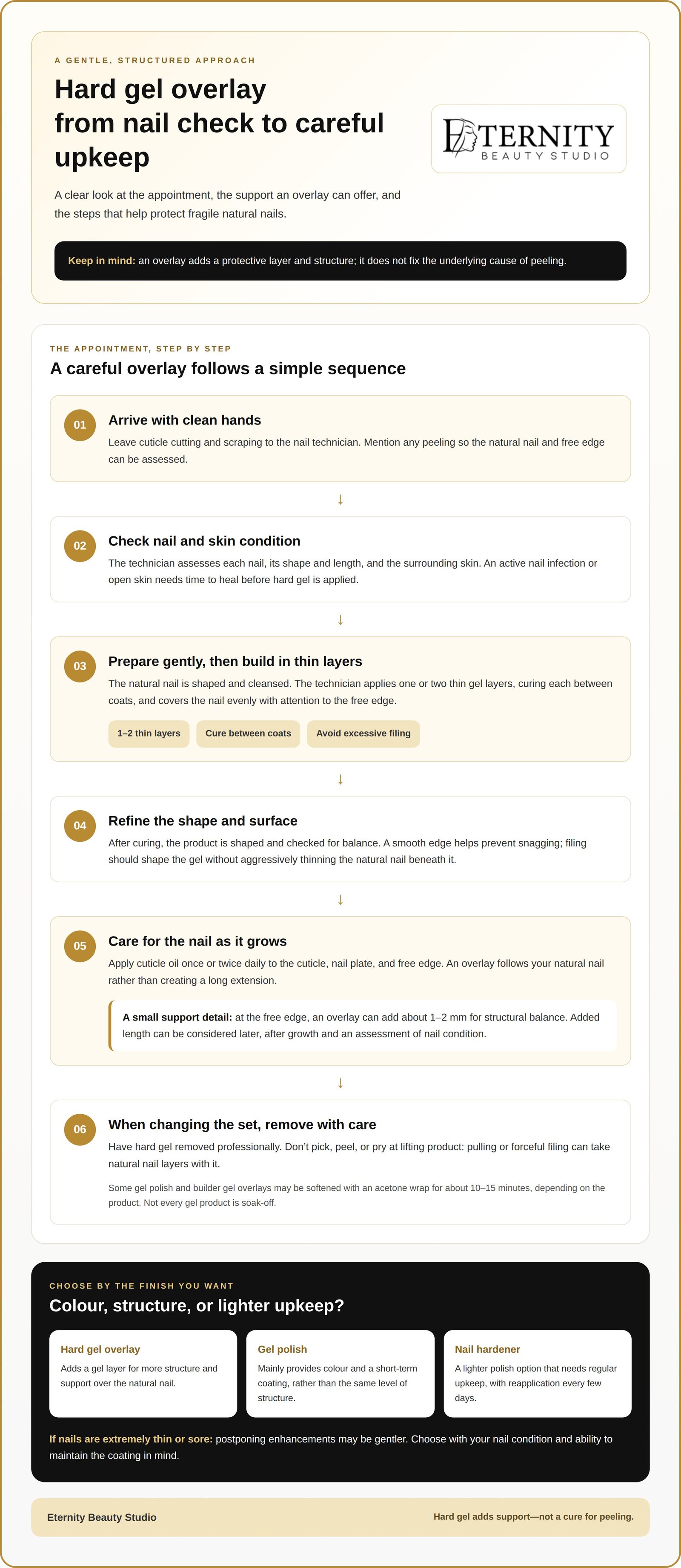
Appointment preparation and application
A hard gel overlay appointment combines nail assessment, careful preparation, and controlled application. A full-set gel overlay often takes 45 minutes to an hour.
Arrive with clean hands, and leave cuticle cutting or scraping to the appointment. Trimming at home can disturb the surrounding skin, while scraping may affect the natural nail surface. Clean hands help the nail technician assess the nail plate and free edge before preparation. Mention any peeling so the application can account for it.
Before applying gel, the nail technician assesses each nail and the surrounding skin. An active nail infection or open skin needs time to heal before hard gel application. Product should not cover an area that needs to recover. The nail’s current shape and length also guide how the overlay is placed.
During application, the technician applies one or two thin layers of gel and cures each layer between coats. Thin layers allow controlled shaping across the nail rather than one thick application. The gel is arranged to cover the nail surface evenly, with attention to the free edge, where peeling or splitting may start.
After curing, the technician refines the shape and checks the surface for balance. Filing should shape the product without aggressively thinning the natural nail beneath it. A smooth edge helps prevent snagging on clothing or hair. Don’t pick at lifting product, as it can pull away natural nail layers; leave corrections to a professional.
Preparation also means arriving with realistic expectations about length. An overlay follows the natural nail, so it supports your existing shape rather than creating a long extension. If you want added length later, the technician can discuss that as a separate design choice once your nails have grown and their condition has been assessed.
How hard gel overlays support peeling and splitting nails
A hard gel overlay is builder gel applied over your natural nail without extending it. For weak nails, it creates a protective surface that may support the free edge as it grows.
Support isn’t a cure. An overlay doesn’t fix the underlying cause of peeling, and aggressive filing or removal can still damage the nail plate. Picking at lifting gel can pull away natural layers, so careful maintenance and professional removal matter.
At the free edge, an overlay can add about a millimeter or two for structural balance. This small amount can reinforce a short nail without turning the overlay into an extension. As the nail grows, a technician can assess whether the shape remains balanced and whether added length suits its condition.
Between appointments, apply cuticle oil daily. Massaging it into the cuticle, nail plate, and free edge once or twice a day helps care for these areas. A fill is generally planned every few weeks as regrowth appears; gel overlay fill cycles are roughly every two to three weeks. Don’t pick at lifted product between visits.
Avoid hard gel if you have a confirmed allergy to nail enhancement materials, an active nail infection, or open skin around the nail that needs to heal. If brittle nails don’t improve after six months of careful habits, see a doctor or dermatologist to discuss the ongoing peeling.
For a professional assessment of your nails and a considered overlay, book a nail appointment.
Eternity Beauty Studio: Nails
Eternity Beauty Studio offers nail services for a polished manicure, with certified artists bringing care and attention to each appointment. If your nails peel or split, a nail appointment is a chance to discuss the finish and level of structure you want, including whether an overlay suits your current nail condition. Gentle preparation and careful upkeep remain central to preserving natural nails.
If you have ongoing soreness, an active infection, or a confirmed allergy to nail enhancement materials, pause enhancements and seek appropriate medical advice before booking. When you’re ready to explore a manicure, Eternity Beauty Studio can help you consider a look that suits your nails and personal style.
Contact Eternity Beauty Studio to discuss your nail appointment.
Choose a nail look that grows with you
Your next manicure can be a considered step toward your preferred look, without committing to added length straight away. If your nails are still peeling, keep the immediate goal modest: choose a finish that suits their current condition, then revisit length as they grow. This leaves room to adjust your plan rather than asking fragile nails to support more than they comfortably can.
A hard gel overlay for weak, peeling nails may be a starting point; future length depends on how your natural nails develop and respond to maintenance. Eternity Beauty Studio’s nail team in Abu Dhabi can help you choose a look around your preferences and nail condition. The studio also offers hair and lash services for other beauty appointments.
Contact Eternity Beauty Studio to plan your next nail appointment. Take the next step at your own pace and choose a finish that feels like you.
Frequently Asked Questions
Can you add length later if you start with an overlay?
Yes. You can begin with your natural length and choose an extension at a later appointment. Fingernails grow about 3 millimetres per month, and a whole fingernail takes roughly four to six months to grow out. That gradual change means your preferred length can be planned around your nail growth rather than chosen all at once.
How often does a gel overlay need a fill?
A gel overlay fill cycle is roughly every two to three weeks. Regrowth is a practical cue for scheduling, so timing depends on how quickly your nails grow and when you want to refresh the look. A fill maintains the existing overlay; removing the set and starting again involves a separate removal appointment.
Is a gel overlay a good option for weak, peeling nails?
It can be an option for some weak nails, and the goal is to support the natural nail rather than lengthen it immediately. Many clients notice the clearest improvement in their natural nails after a couple of hard gel fill cycles. If your nails are sore or their condition is worsening, prioritise understanding the cause before choosing an enhancement.
Want help choosing a nail style?
First decide whether you want to keep your current length or change the silhouette with an extension. Then share your preferred shape and finish, along with any previous reaction to nail products, with the nail technician. These details help frame the choice around your design goals.
What are brittle nails?
Brittle nails tend to break, split, or peel instead of remaining intact as they grow. Note where the change appears, such as at the tip or along the side, and whether it affects one nail or several. If brittleness continues after six months of careful habits, see a doctor or dermatologist for advice.
Hard gel overlay vs builder gel, BIAB, and acrylic for weak nails
Builder gel and BIAB are builder-style overlays that can offer more structure than gel polish. Dip powder can also be durable, while acrylic is another type of nail enhancement. For weak nails, compare the intended result and maintenance approach, not just the product label. Avoid hard gel if you have a confirmed allergy to nail enhancement materials.